CONNECTED DASHBOARDS
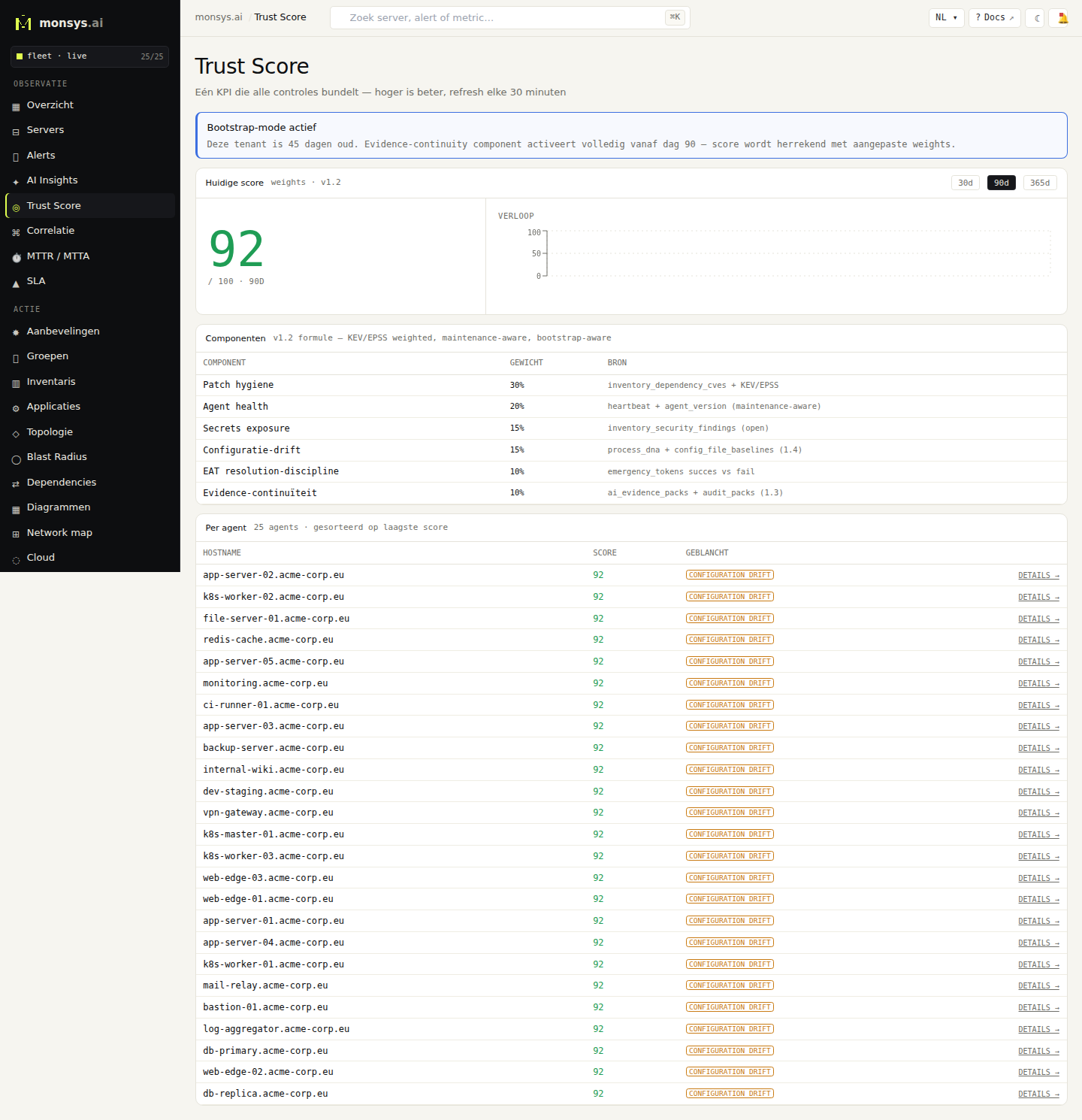
One Trust Score that captures it all: from cert renewals to AI PII
Twelve signal sources, one table, a handful of overviews. No more 15 silo tables and no more separate dashboards that don't talk to each other.
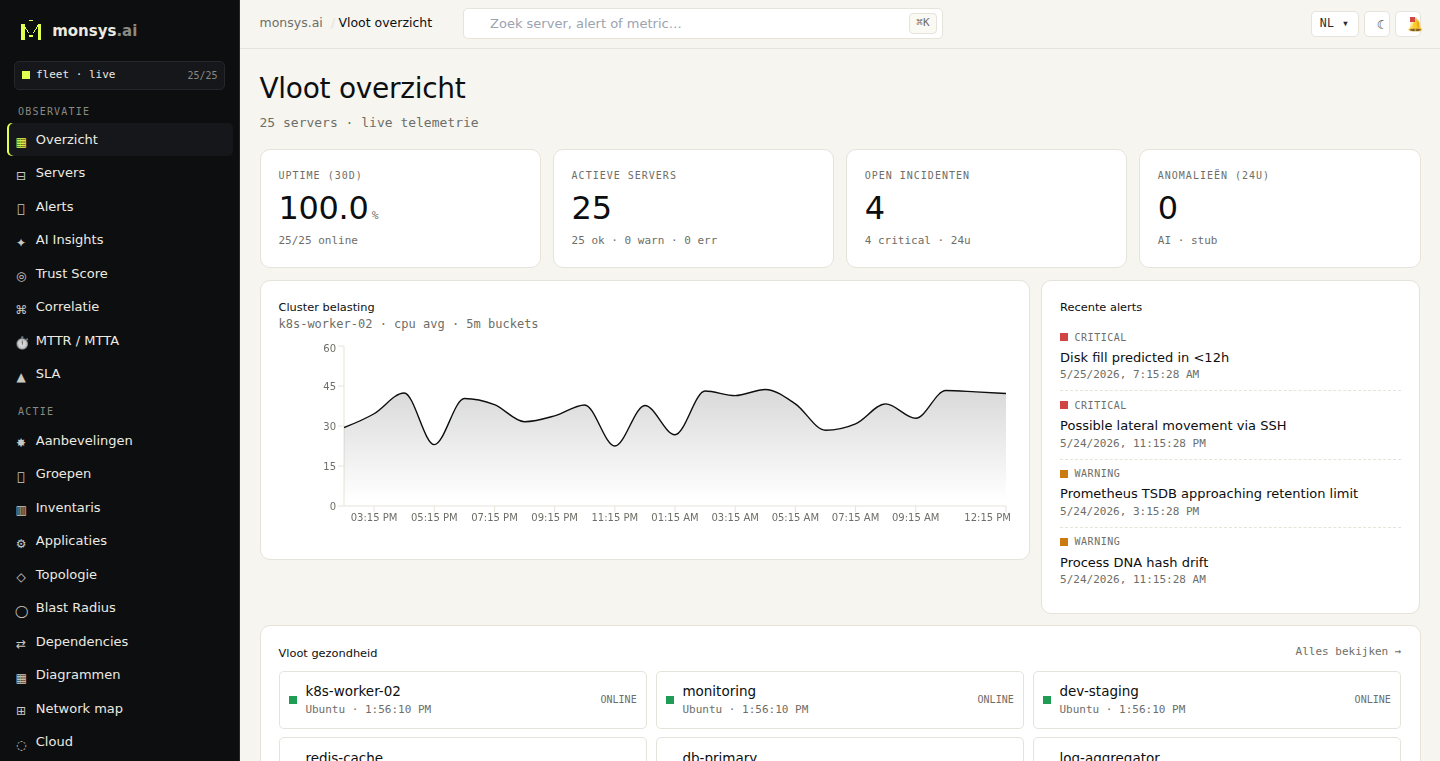
Twelve signal sources, one table, a handful of overviews. No more 15 silo tables and no more separate dashboards that don't talk to each other.
Every monitoring and compliance product builds its own little silo. Trust Score lives in tool A, compliance in tool B, audit in tool C, and nobody combines them into a single number for the boardroom.
Cert scans, DNS hygiene, secrets, backup status, clock drift, endpoint posture, container hygiene, license, identity, supply chain: all fan-in into one hypertable.
Severity-weight ladder, weighted average over 8 categories, reproducible via inputs_hash. Dashboards on top.
External accountant gets one ZIP with evidence packs, offline verify script and signing-keys snapshot. No access to your live data.
All from signal_streams + the existing inventory and AI tables. No duplication, no drift.
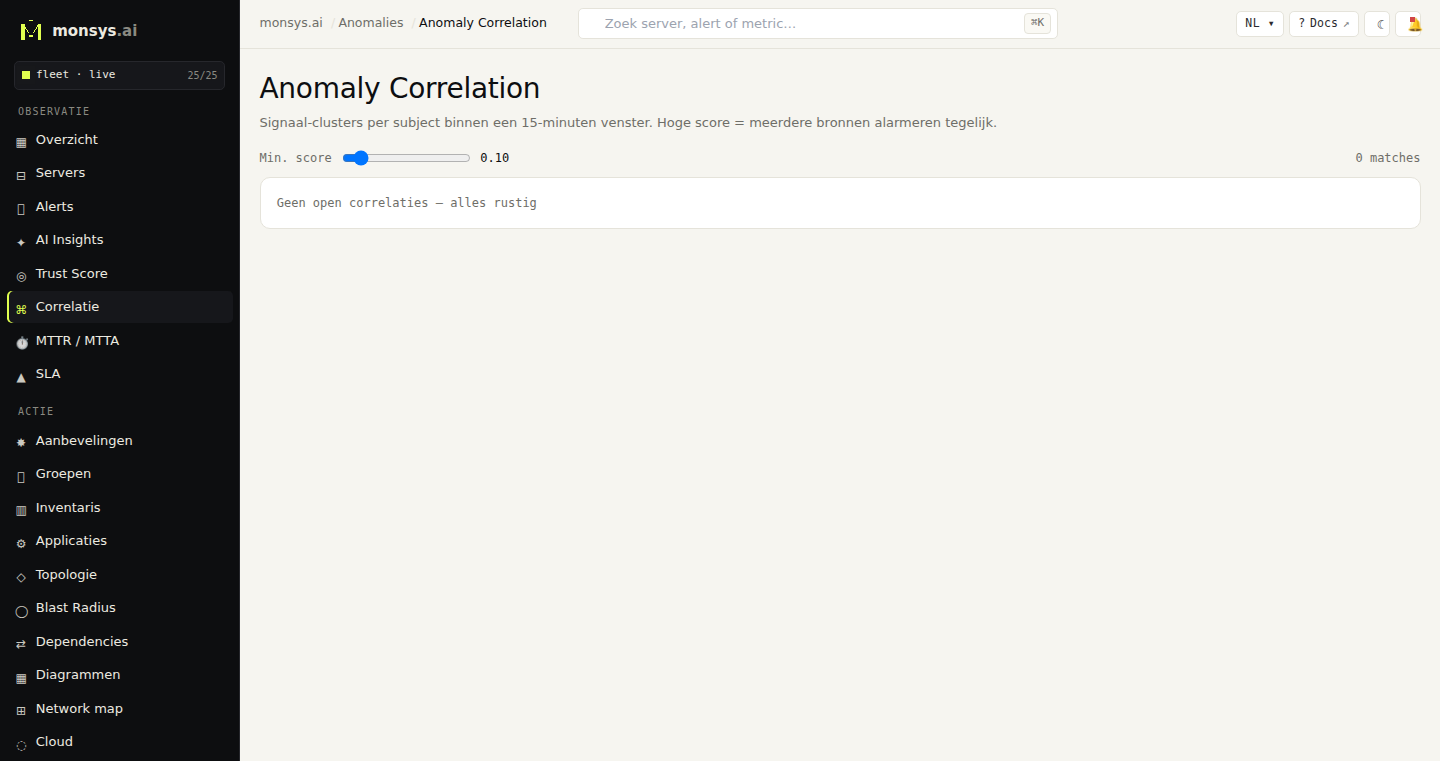
Stream of signal clusters per subject in 15-min windows. Ack button per cluster.
MTTA + MTTR p50/p95 per (scope, severity) over 90d. Chronically-ignored flag on MTTA p50 > 7d.
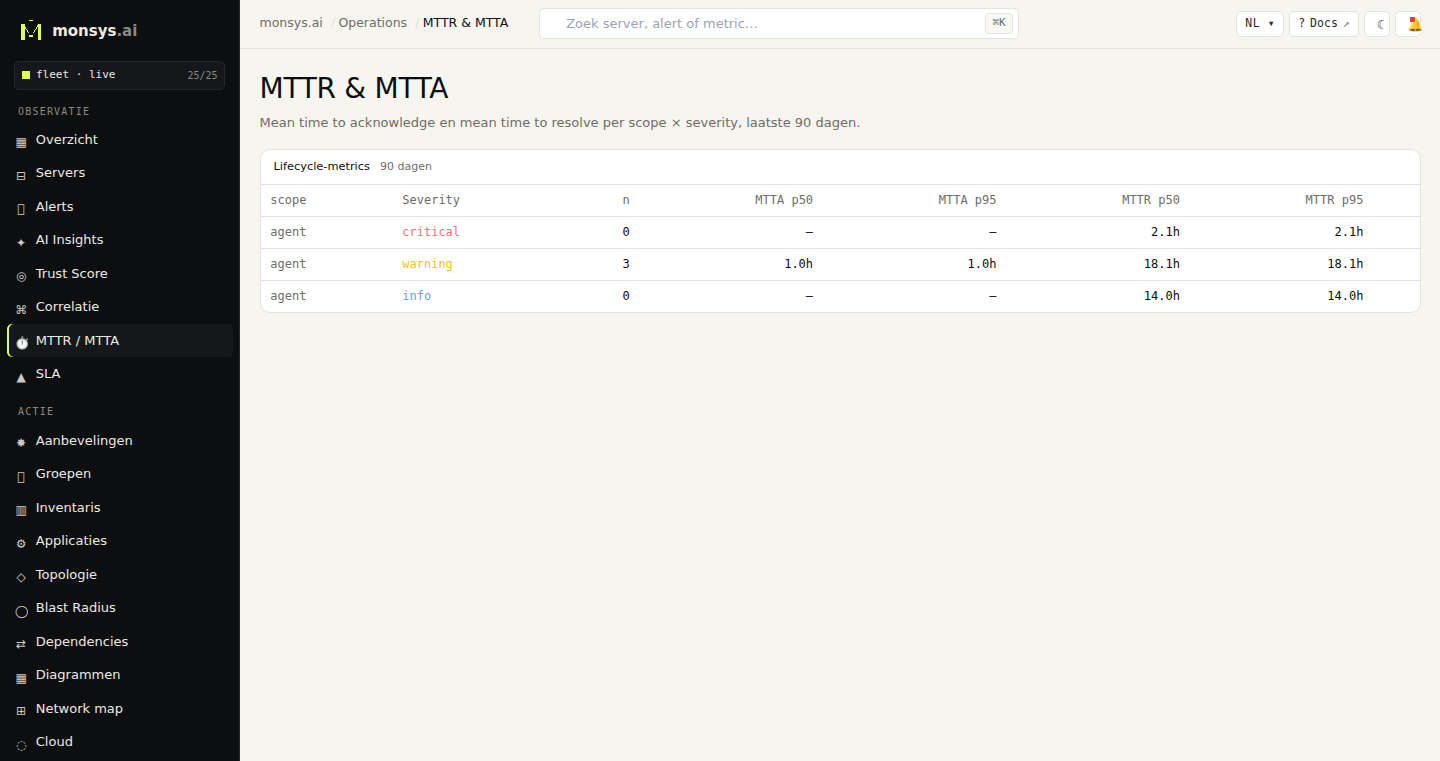
Concentric SVG: pick a node, see 2-hop downstream impact + danger color from open signals.
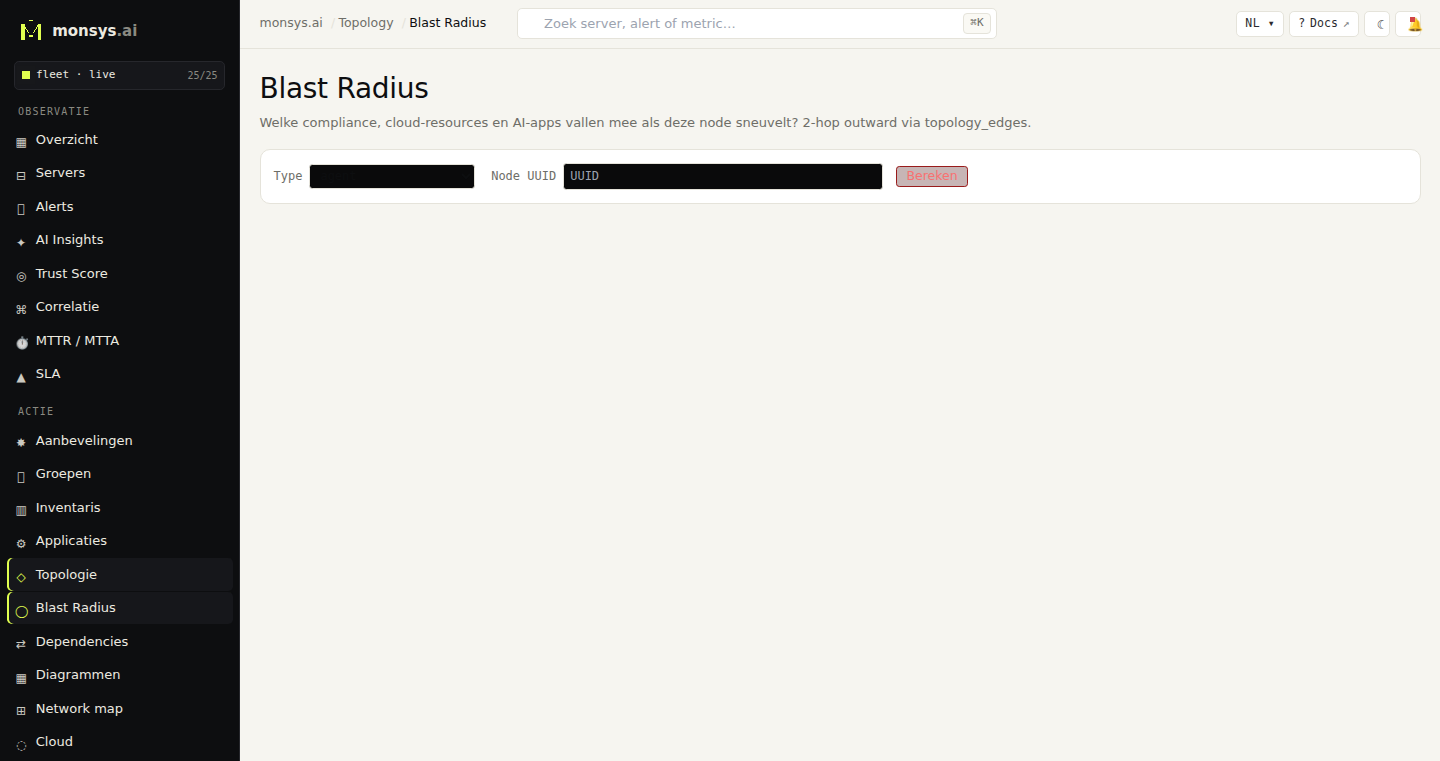
Per person: in which systems they are present. No auto-correlation by email: admin links explicitly.
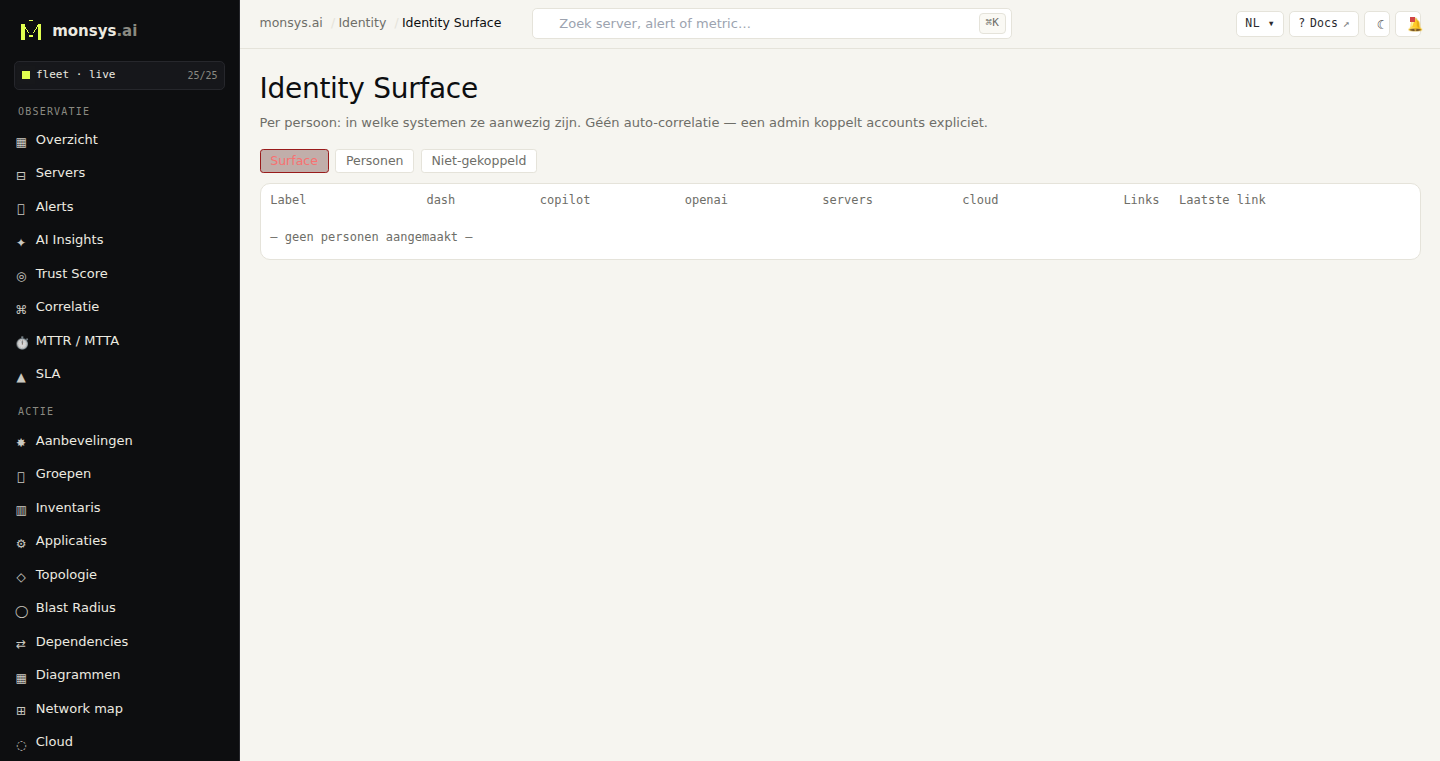
Heatmap of controls × month, dark-green/light-green/orange/red/grey + Auditor-mode toggle.
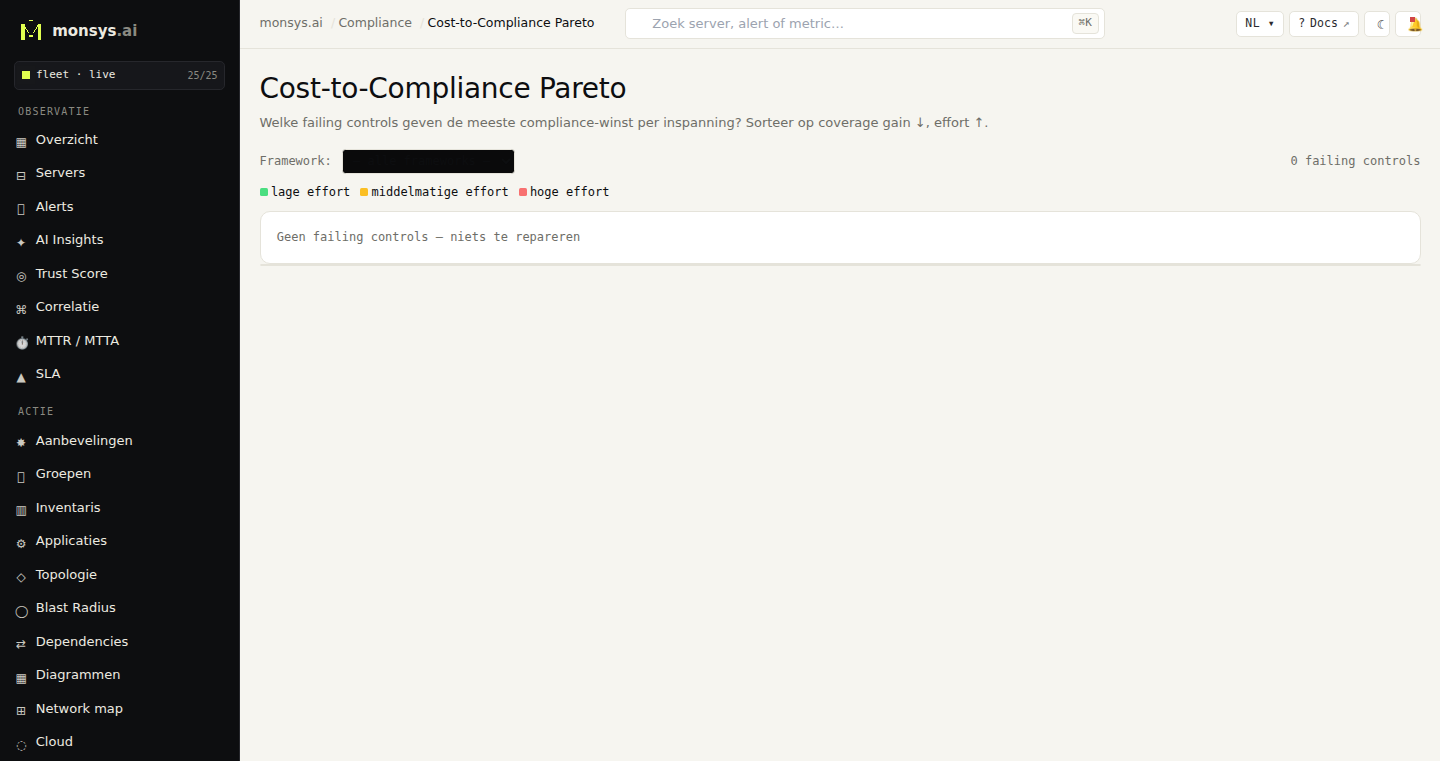
Which failing controls give the most compliance gain per effort. Sort by gain ↓, effort ↑.
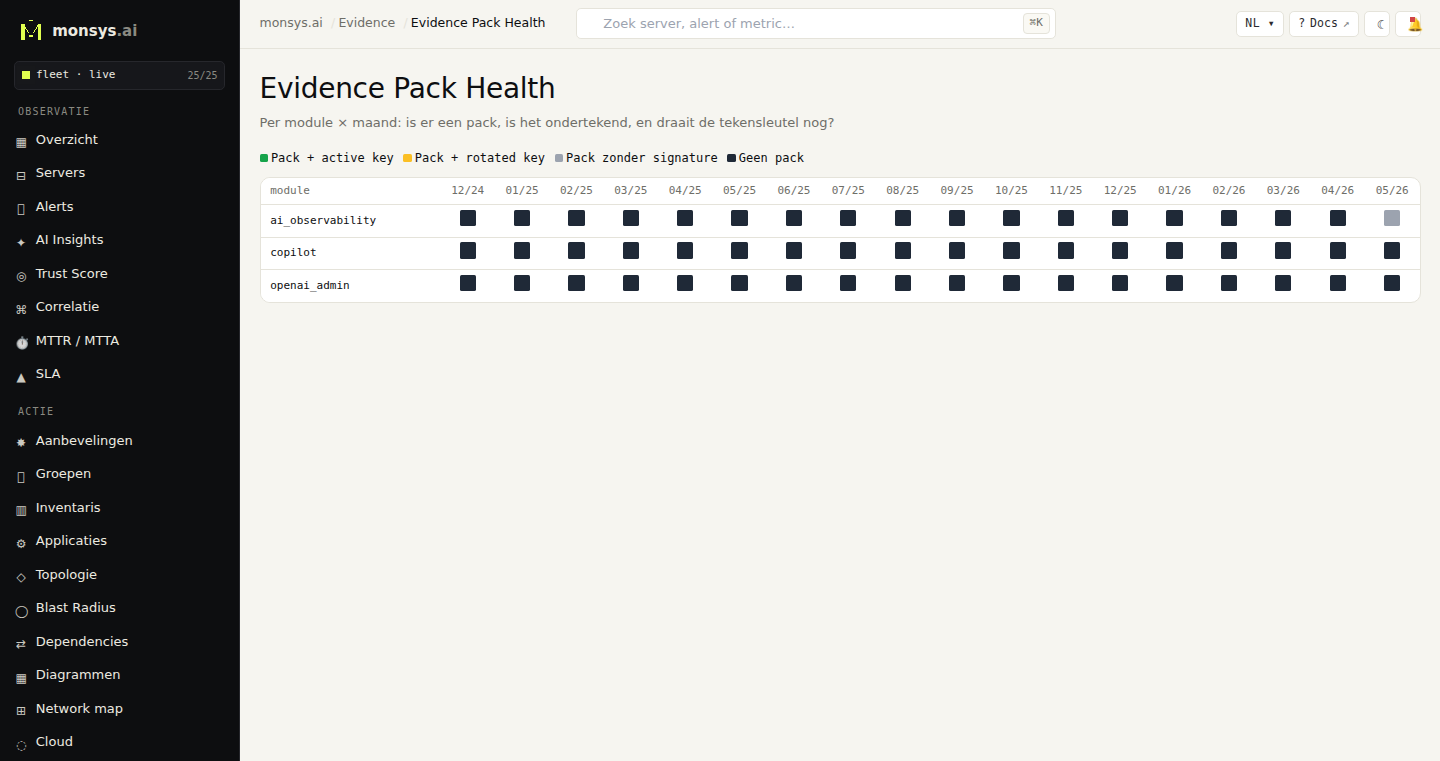
Heatmap module × 18m: missing / present / signed_active / signed_rot.
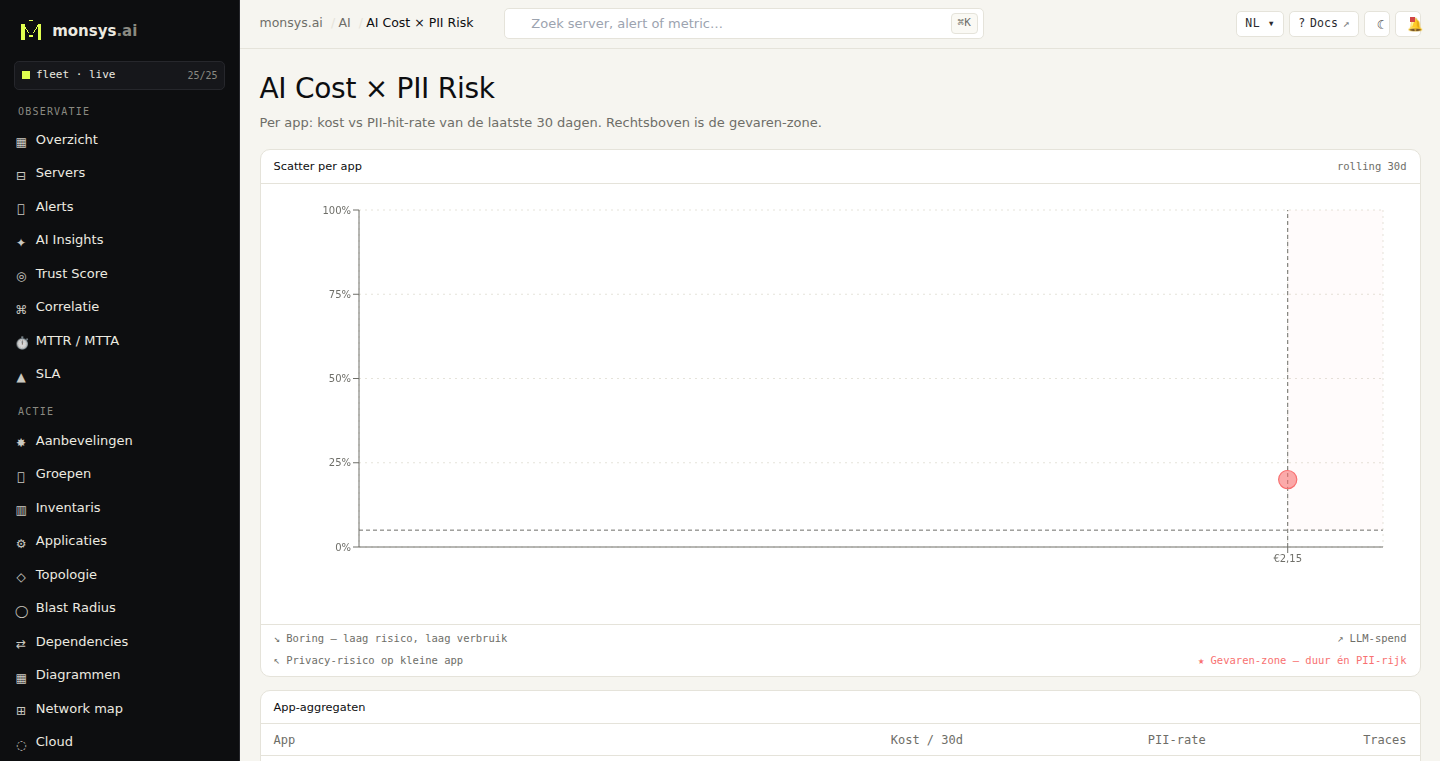
Per AI app: cost (log-X) vs PII rate (linear-Y). Bubble size = traces. Top right = danger zone.
Generate a ZIP bundle for an external accountant. One-shot download URL, 24h expiry.
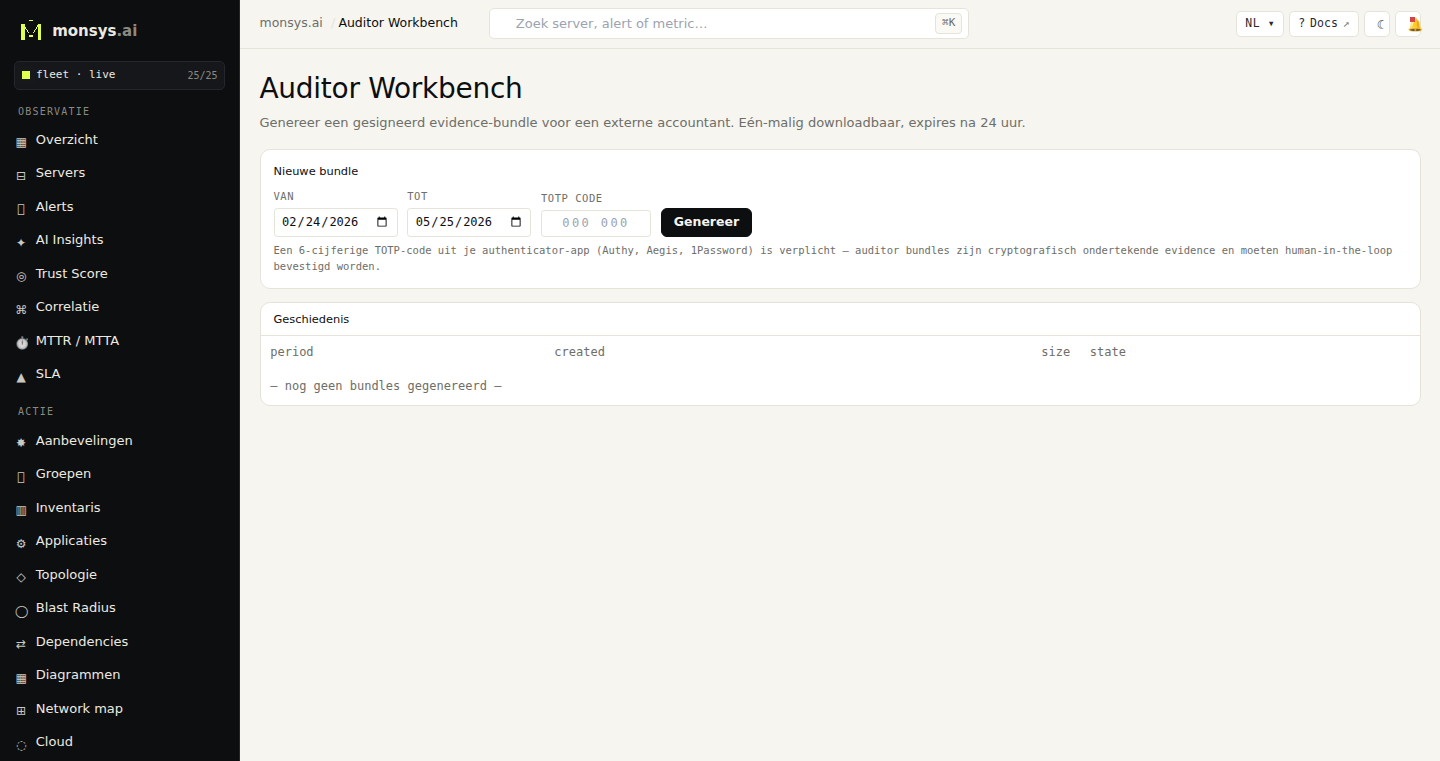 Auditor page →
Every worker, ingest handler and hub-side scanner writes through one Go interface into one table. Adding a new check = one entry in SourceToCategory + one Emit() call.
emitter.Emit(ctx, tenantID, signals.Signal{
    Source:      "cert_scan",
    SubjectType: "endpoint",
    SubjectID:   "api.example.com:443",
    Key:         "cert.expiring_soon",
    Value:       map[string]any{"value": 17, "fingerprint": "sha256:..."},
    Severity:    signals.SeverityMedium,
    ObservedAt:  time.Now().UTC(),
})
RLS is enabled on signal_streams (defence-in-depth). Production queries use explicit tenant_id WHERE clauses.
Trust Score, Anomaly Correlation, Blast Radius, Cost-to-Compliance Pareto. The rest of the platform works as before.
Start free →Read-only auditor role, TOTP-gated bundle export, offline verify without monsys credentials.
For auditors →Cross-tenant cockpit with urgency sorting. White-labelled for your own customers.
For MSPs →Connected Dashboards ships with every monsys account. No extra price, no separate module.
Architecture, Trust Score formula, supply-chain pipeline, NIS2 / AI Act / CRA mapping. Free PDF after a short form.
Download whitepaper →